Field Notes
Compsognathus
Say it: komp-SOG-nay-thus
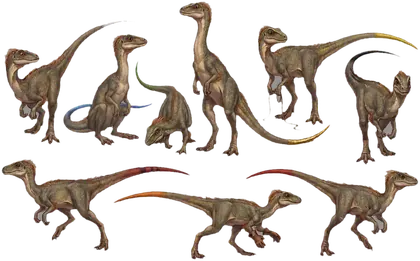
It means pretty jaw. Late Jurassic, about a hundred and fifty million years ago, in what is now southern Germany and southern France. About as long as a turkey, and most of that is neck and tail. It weighed about three pounds — roughly what a big loaf weighs, or a full water bottle. You could pick one up. It would not enjoy it.
We know what it ate because one of them died with dinner still inside it
The best skeleton anybody has found came out of limestone so fine you can see the shape of a feather in it, and inside its ribs are the bones of a small fast lizard, swallowed whole and not chewed. That is how we know. Not from its teeth, which only tell you what an animal could eat. From its last meal, still where it left it, a hundred and fifty million years later.
The same lagoons gave us one of the first birds
Archaeopteryx came out of the same kind of rock, laid down in the same string of shallow lagoons within about a million years — different quarries, and not the same afternoon, but near enough in place and time that a Compsognathus and something with feathers could have stood on the same mudflat and looked at each other. For about a hundred years Compsognathus was the closest thing to a bird anybody had, which is why it turns up in so many old books.
How we know
Two really good skeletons, one from Germany and one from France. Long shin bones, which is what a runner has. And one lizard in the wrong stomach.
What we made up. The clicking. The colors, the names, and the short count. Nobody knows whether they lived in troops at all, and if they did, nobody has any idea what they sounded like. We gave them a sound because a village that lives with animals would have a word for the noise they make, and Tick-Tocks is the word forty children would land on.
This page is printed at the back of Nine Small Thieves, one of ten. Copy it, print it, read it out in a classroom — that is what it is for.