Field Notes
Deinocheirus
Say it: DYE-no-KY-rus
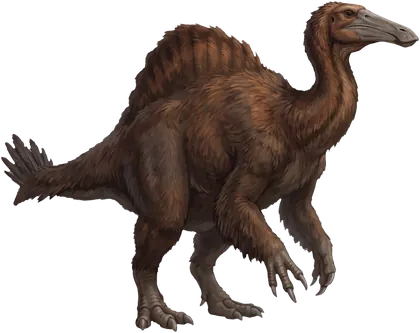
Terrible hand. Late Cretaceous, about seventy million years ago, in what is now the Gobi Desert. About as long as a school bus, humped along the back, with a duck's bill on the front of it and two arms each as long as a grown man is tall.
For nearly fifty years, almost all anybody had was the arms
In 1965 a dig in Mongolia turned up two arms, about eight feet each from shoulder to claw, along with the shoulder bones, some ribs and a few pieces of the belly — and no skull, no legs and no tail. They named the animal terrible hand and then waited, because that is all you can do. The rest of it was not put together until 2014, and part of that skeleton had been dug up illegally and sold, and had to be given back to Mongolia before anyone could study it. So an animal was famous for its hands for half a century before anybody knew it had a bill like a duck.
It swallowed stones on purpose
Inside one skeleton, where the stomach had been, somebody counted more than fourteen hundred smooth pebbles worn round. Birds do that. They keep stones in a gizzard — a tough muscular bag that grinds food up — because they have no teeth to chew with, and this animal had no teeth either. Mixed in with the stones were fish bones and fish scales. So: a toothless, duck-billed thing the size of a bus that ate water plants and fish and ground them up with a bag of gravel.
How we know
Two arms, fifty years of waiting, two more skeletons, a stolen skull that came home, and a heap of pebbles somebody sat down and counted.
What we made up. The Wader's patience, and the idea that an animal walks into water because it does not know what else to do. Not made up: the arms really are about eight feet long, and the claws on the end of them really are blunt, and blunt claws are for pulling things down, not for holding on.
This page is printed at the back of The Law of the Roost, one of ten. Copy it, print it, read it out in a classroom — that is what it is for.