Field Notes
Gallimimus
Say it: gal-ih-MY-mus
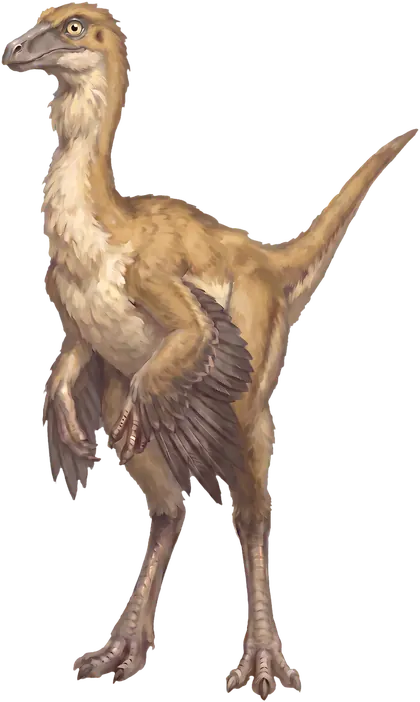
It means chicken mimic. Late Cretaceous, about seventy million years ago, Mongolia. Twenty feet long — mostly neck, tail and leg — and about as heavy as a big pony. Kettle is a full-grown one.
It had no teeth, and it may have been a strainer
Gallimimus had a beak like a goose and nothing behind it. One very well-preserved skull has fine comb-like ridges along the inside edge of the upper beak, and combs like that, in birds alive today, push water and mud out and keep the small things in. So one good guess about Kettle's family is that they stood in shallow water with their heads down and strained dinner out of it, the way a duck does. It is a guess, and not everybody makes it: other people who have looked at the same beak think this animal was mostly eating plants.
It grew a second set of feathers when it grew up
We have a close cousin, Ornithomimus, dug up in Alberta with its feathers still printed in the rock. The young ones have a fine fuzzy coat all over, which probably did what a coat does and kept them warm. The grown-ups have that and something else: long stiff feathers down the whole arm, like a wing on an animal far too heavy to fly. Only the adults have them. Something you do not grow until you are old enough to need it is not usually for keeping warm — it is for being looked at, or for sitting over eggs, and nobody yet knows which.
How we know
Feathers hardly ever survive, so most of what we know about what dinosaurs wore comes from a handful of very bad afternoons — a sandstorm, a mudslide, the floor of a still lake. That is what makes the Alberta animals strange. They came out of ordinary coarse sandstone, which is the last place anybody expected to find a feather, and that is exactly why the people who dug them up were so surprised. It means there may be more of them, in rock nobody has bothered to look at twice.
What we made up. The rig, the whistle, and waiting at the top of a hill. The overstep, the beak, the arm fan, and the fact that she cannot do stairs and panics at her own reflection in standing water are what a long-legged, small-headed, big-eyed running animal is actually like.
This page is printed at the back of The Far Map, one of ten. Copy it, print it, read it out in a classroom — that is what it is for.