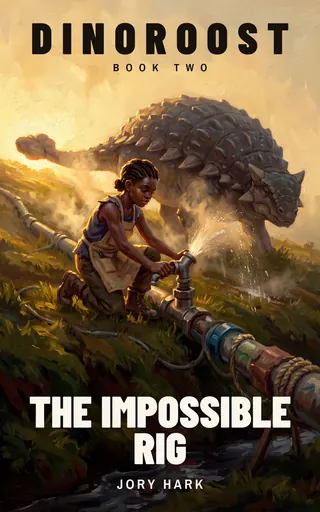
The Impossible Rig — Dinoroost Book Two, cover

$8.99 paperback, when it opens

ShipsIn 3–5 working days
StatusNot yet on sale

Not on sale yet. Nothing here has cleared the publisher’s own gate: no volume has a typeset interior, a print wrap, or an ISBN in either format, and the ebook price has not been ruled. Every free page on this site is finished and true — the whole first chapter, ten Field Notes, ten builds — and the shop opens when the books do. Write to orders@dinoroost.com to be told when.

Dinoroost · Book Two of ten

The Impossible Rig

The Roost keeps twenty-two days of water a hundred and twenty feet up a tree, and loses all twenty-two in forty minutes.

Nell Okonjo, fourteen, is the Roost’s Head Rigger. She built the water system. She built it well. Then at grey light the tin pan under the tank stops dripping, and two miles of pipe quietly empties itself back down a hill.

There is no electricity left to fix it with, and the Roost does not weld. What there is: three days of water, ninety chickens, nine terraces of food, a herd of ninety-foot animals wandering along the pipeline who do not know that anybody exists, and one extremely polite boy from downriver holding the part she needs and a receipt he has already written.

Nell has to build a thing nobody believes can be built — and then find out whether she built the right one.

The picture out of this one

Thirty-six kids lying flat along two miles of pipe, an ear each on the metal, passing a knock down the hill as a wave of raised hands.

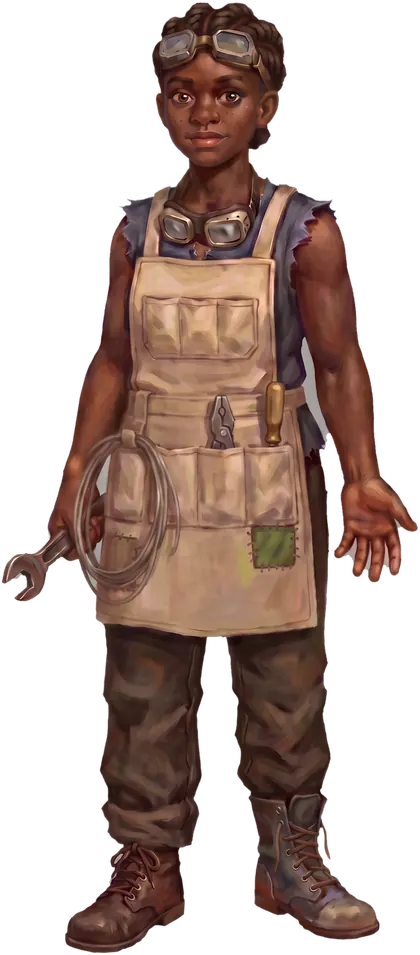
Nell Okonjo, fourteen, in a seven-pocket canvas apron, goggles on her forehead and a second pair round her neck.
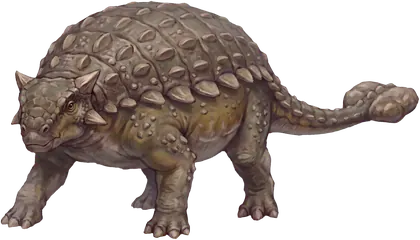
Boiler, an Ankylosaurus, six tons and wider than a car, armoured and low to the ground.

The spotlight

Nell Okonjo

14, Head Rigger

Head Rigger. Seven pockets, one category per pocket. She can hear a bad bearing three platforms away and has never been wrong, and when Nell runs, everyone runs.

Matched to Boiler, Ankylosaurus. Six tons and wider than a car. Three slow knocks of his club on the decking means open the gate, and he will not cross a bridge until he has watched a person cross first.

In the back — Field Notes

Boiler, an Ankylosaurus, six tons and wider than a car, armoured and low to the ground.

Ankylosaurus

Ankylosaurus — what the club was for, and how the tail was actually swung.

Read the whole page free →

In the back — Make It

Ink drawing of the finished build.

A siphon out of two jars and a length of tube, and why breaking it on purpose matters.

Household junk, numbered steps, under thirty minutes, and a number the child writes down at the end.

Build it free →

SpotlightNell Okonjo, 14, Head Rigger
Reading ageAges 9-12 · Grades 4-6 · grade 3–4 text under a grade 4–6 story
Length23,012 words · eighteen chapters · a two-hour read
Print5.5 x 8.5 in · Paperback, perfect bound, black-and-white interior · about 148 pages, not yet confirmed from a proof
Paperback ISBNnot yet issued
EPUB ISBNnot yet issued
IllustrationsEighteen, at the head of every chapter
ContentPeril yes, cruelty no. No child dies, no swearing, no romance, and nothing anybody builds is meant to hurt anyone
Written byJory Hark — a pen name

← Book One, Signal Green  ·  Book Three, The Salt Run →

Inside this one

Eighteen drawings,
one a chapter.

Each one is the object that chapter turns on, at the head of the chapter, in a single ink. All eighteen are here — nothing about this book is behind a Look Inside button.

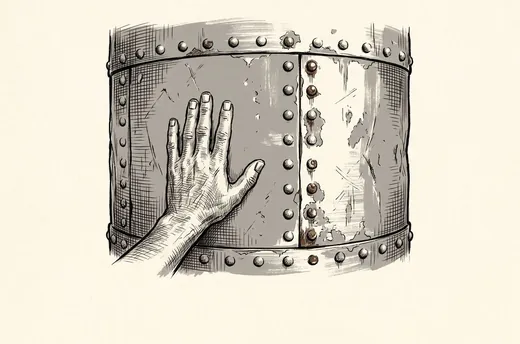
Ink drawing. A flat open hand pressed against the riveted steel side of a very large tank, the rivets in two vertical seams.
Chapter 1
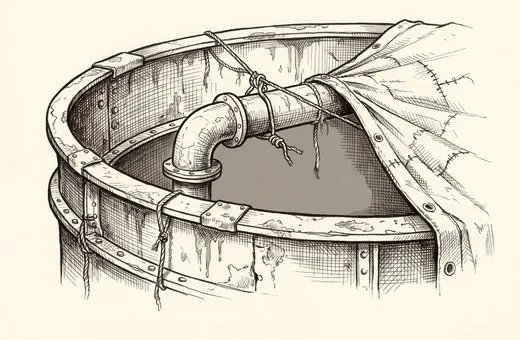
Ink drawing. The rolled rim of a big steel tank seen close, with a supply pipe crossing over the rim, elbowing, and turning down inside out of sight.
Chapter 2
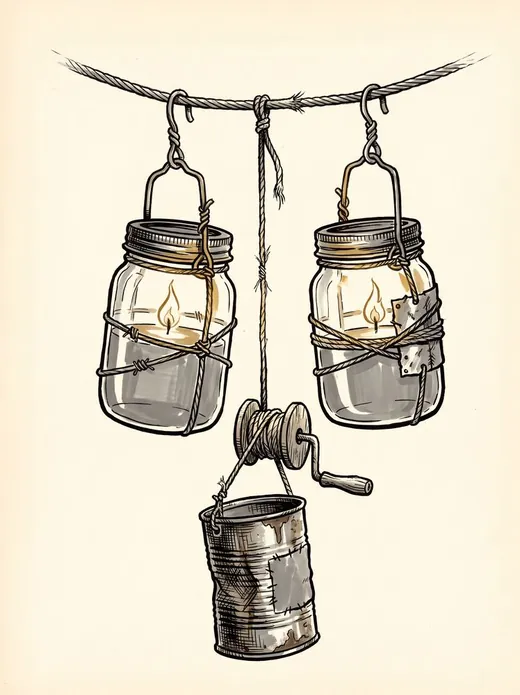
Ink drawing. Two lamps made from jam jars, each with a small flame in it, hanging by wire hooks from a taut bicycle brake cable.
Chapter 3
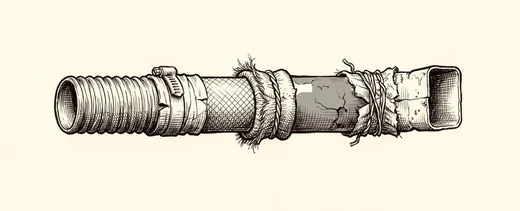
Ink drawing. One short section of mismatched water pipe lying by itself, about four feet long, the three joints each made differently — a hose clamp.
Chapter 4
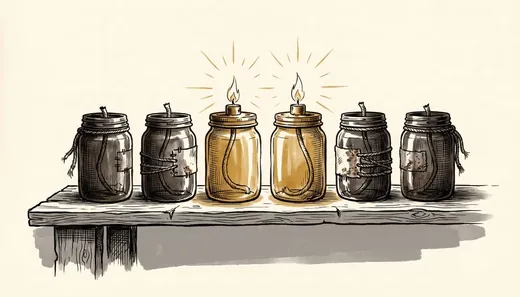
Ink drawing. Six lamps made from jam jars standing in a row along the middle of a plank table, two of them lit and four dark.
Chapter 5
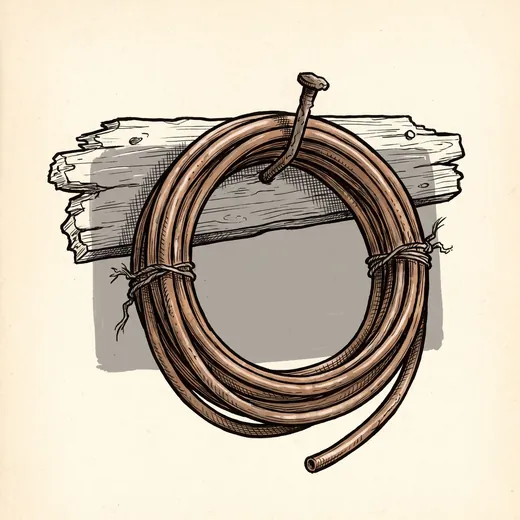
Ink drawing. A coil of soft copper tube about the size of a dinner plate, thumb-thick, wound flat and tied once with wire, hanging from a single bent nail.
Chapter 6
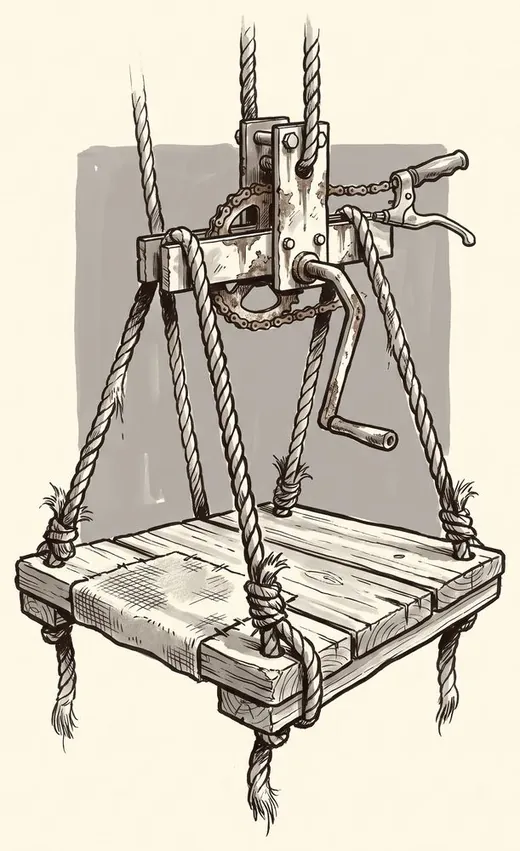
Ink drawing. A bosun's chair — a plank seat on four ropes — hanging from a loop of bicycle chain running over a small sprocket.
Chapter 7
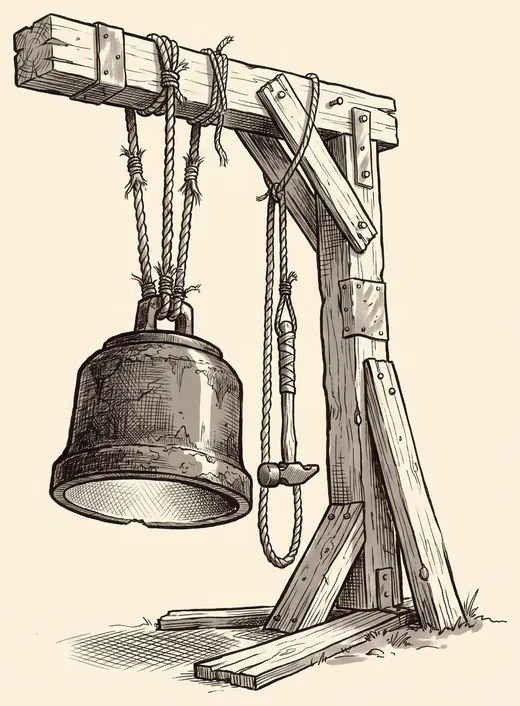
Ink drawing. A bell cut from a fire truck's brake drum, hung by three chains from a timber frame, its striking face worn bright.
Chapter 8
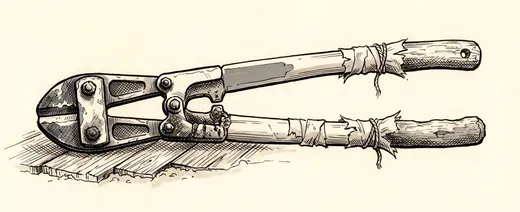
Ink drawing. One pair of long-handled bolt cutters lying closed and flat, the whole tool, the jaws nicked and bright where they have cut.
Chapter 9
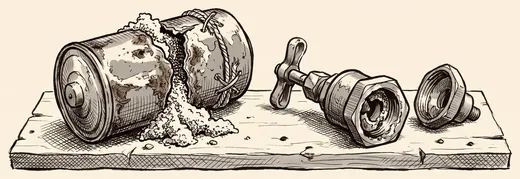
Ink drawing. Two broken machine parts lying side by side and well apart from each other, small in the middle of the image: a burst cylindrical cell with its seam spl.
Chapter 10
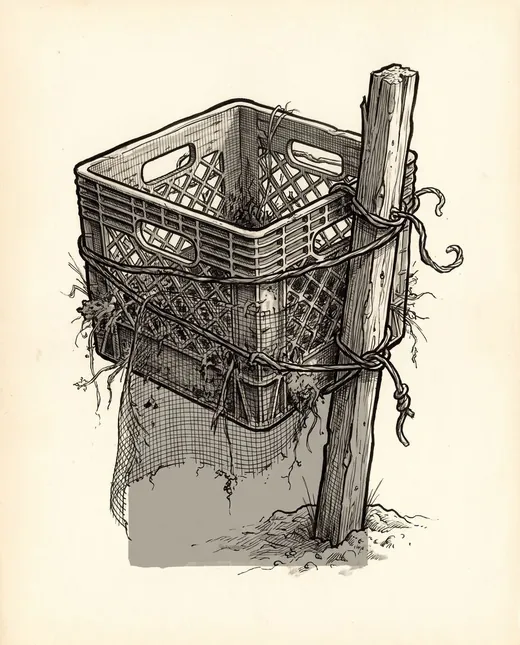
Ink drawing. A wire milk crate wrapped in fine window screen and lashed to a wooden stake with twisted wire, the screen furred and blinded with silt and weed.
Chapter 11
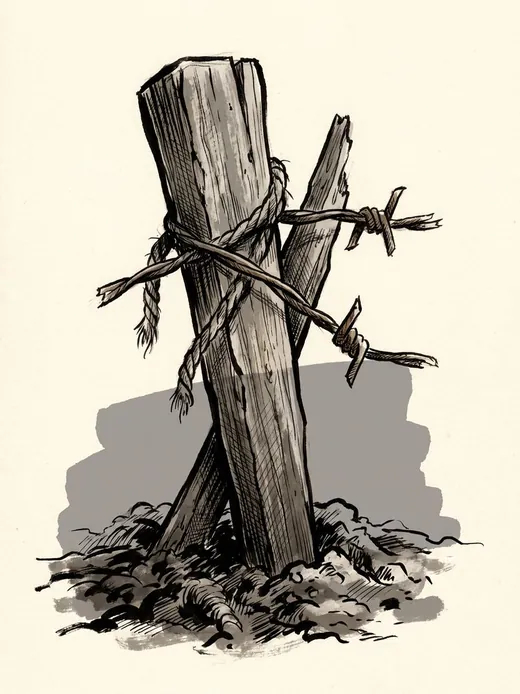
Ink drawing. A wooden stake driven into mud at a slight lean, with two cut ends of wire still twisted round it and nothing attached to them.
Chapter 12
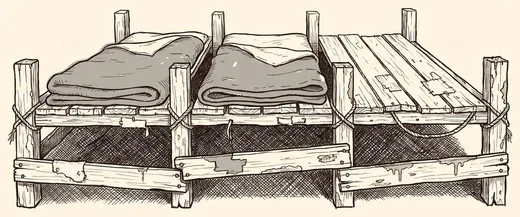
Ink drawing. Three narrow plank bunks in a row, built one against the next, blankets folded on the first two and the third stripped bare to its boards.
Chapter 13
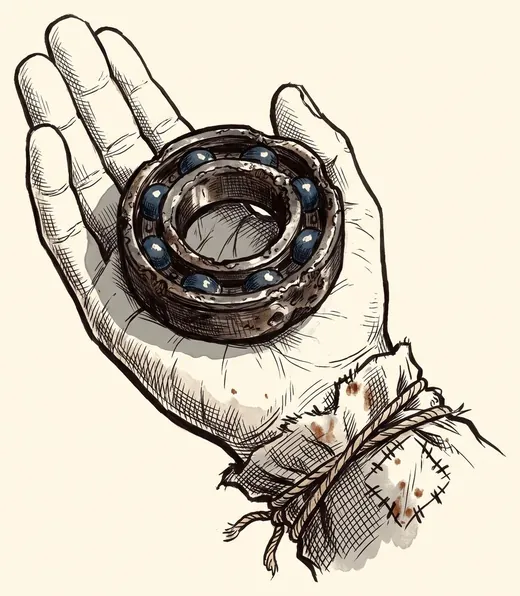
Ink drawing. A seized ball bearing held in an open palm, its two halves welded into one piece by heat and gone the color of a burnt spoon.
Chapter 14
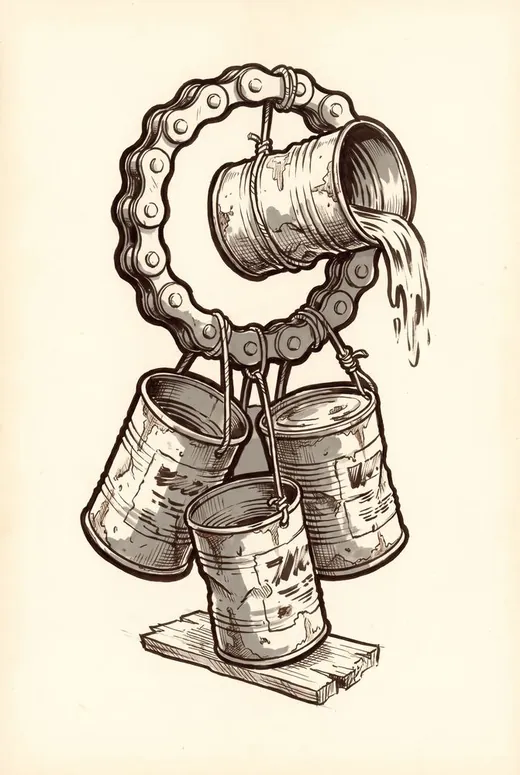
Ink drawing. A short length of bicycle chain carrying five old tin cans a hand's width apart, the whole length of chain visible.
Chapter 15
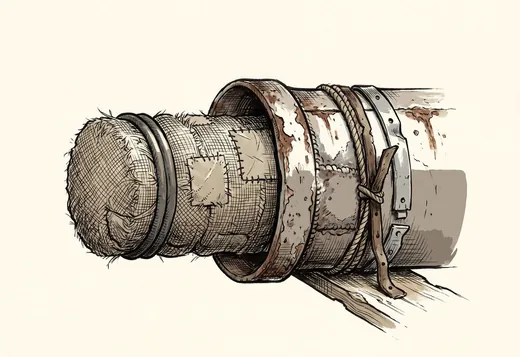
Ink drawing. A foam pipe pig, cylindrical and slightly oversized, pushed halfway into the mouth of a large pipe and gripping.
Chapter 16
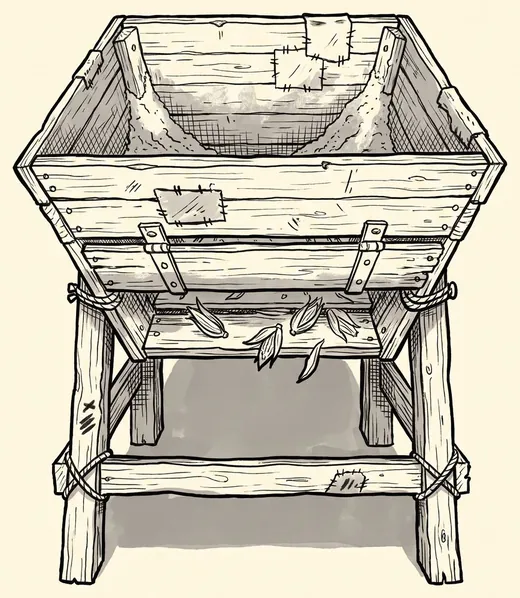
Ink drawing. A wooden feed hopper on legs with its bottom gate slid fully open and nothing coming out of it, a few husks caught in the gate track.
Chapter 17
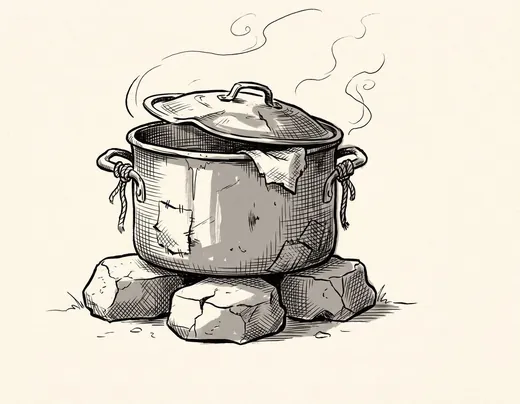
Ink drawing. A big dented cooking pot with its lid pushed half off, standing on three hot stones, steam coming off it in slow trails.
Chapter 18

Questions about this one

Eight answers,
from this book’s own file.

Every one of these is a fact out of the manuscript or the catalogue rather than a sales line — the measured word count, the drawings that actually exist, the animal on the nonfiction page at the back.

What happens in The Impossible Rig?

The Roost keeps twenty-two days of water a hundred and twenty feet up a tree, and loses all twenty-two in forty minutes.

Who is it about?

Nell Okonjo, 14, Head Rigger. Thirty-six kids lying flat along two miles of pipe, an ear each on the metal, passing a knock down the hill as a wave of raised hands.

How long is The Impossible Rig?

About 23,012 words across eighteen chapters, a cold open and a tag - roughly a two-hour read for a confident reader in the 9-12 band.

Is it illustrated?

Yes. Eighteen drawings, one at the head of every chapter.

Do I have to read the others first?

Reading order is publication order, and there is no other order. This is Book Two of ten, and it closes its own problem, so it can be read on its own - but the season runs a clock under all ten and it reads better in order.

What is the nonfiction page at the back?

Ankylosaurus. Ankylosaurus — what the club was for, and how the tail was actually swung. The page names its own sources and says which parts of the story were invented, and it is free to read on this site.

What do you build at the back?

A siphon out of two jars and a length of tube, and why breaking it on purpose matters. Household junk, numbered steps, under thirty minutes, and a number the child writes down at the end.

Is anything in it frightening?

Peril yes, cruelty no. No child dies, there is no swearing and no romance, and nothing anybody builds in these books is meant to hurt anyone - that last one is the first of the three Laws the series runs on.