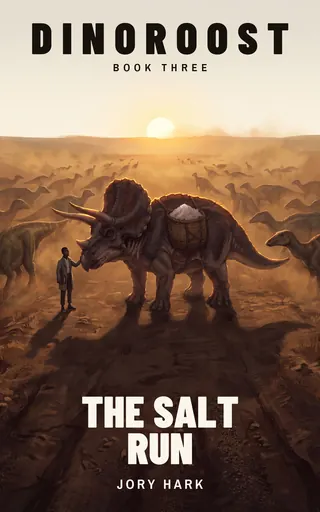
The Salt Run — Dinoroost Book Three, cover

$8.99 paperback, when it opens

ShipsIn 3–5 working days
StatusNot yet on sale

Not on sale yet. Nothing here has cleared the publisher’s own gate: no volume has a typeset interior, a print wrap, or an ISBN in either format, and the ebook price has not been ruled. Every free page on this site is finished and true — the whole first chapter, ten Field Notes, ten builds — and the shop opens when the books do. Write to orders@dinoroost.com to be told when.

Dinoroost · Book Three of ten

The Salt Run

The village loses eleven days of food in one night, and the only thing that stops the rest rotting is nine miles up-valley.

Odji Faal keeps the Ledger, which means he keeps the trades, the rules, the birthdays and the village — and he is fifteen, and in this valley you go Quiet on the morning of your sixteenth birthday. Everybody knows his date. Nobody says it.

When the winter store vanishes overnight, somebody has to send six people and two enormous animals up the valley for road salt. Odji is the one holding the pencil. He writes six names, sends them out at grey light, and stays at the rail — while the road goes on without him, nine miles up-valley to a wooden dome full of the one thing everything large in the valley also wants.

Then the Tally poles up the river with a boat full of food and a crate of collars, free, no charge. Their offer is generous, and reasonable, and true, and it stands for nine days.

The picture out of this one

The only door of the salt dome, filling up with animals.

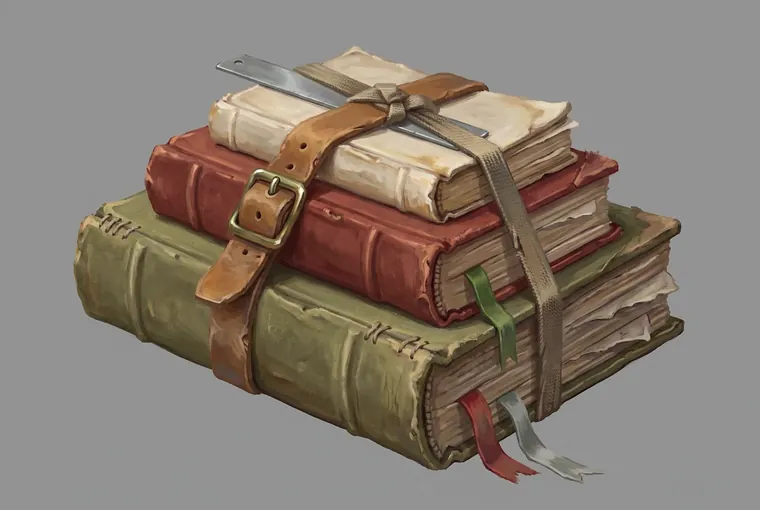
Odji Faal, fifteen, tall and stooped in a patched grey wool coat, three books strapped together under one arm.

The spotlight

Odji Faal

15, Keeper of the Ledger

Keeper of the Ledger — every trade, every debt, every birthday, in three books strapped together. He will not Match, because he will not make an animal love somebody who is leaving.

In the back — Field Notes

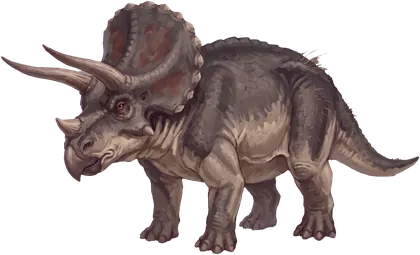
Aunt Bess, an eight-ton Triceratops, who walks the cargo wheel.

Triceratops

Triceratops — the frill, and what the bone tells you it was and was not for.

Read the whole page free →

In the back — Make It

Ink drawing of the finished build.

The balance beam: making two loads equal without knowing what either weighs.

Household junk, numbered steps, under thirty minutes, and a number the child writes down at the end.

Build it free →

SpotlightOdji Faal, 15, Keeper of the Ledger
Reading ageAges 9-12 · Grades 4-6 · grade 3–4 text under a grade 4–6 story
Length22,482 words · eighteen chapters · a two-hour read
Print5.5 x 8.5 in · Paperback, perfect bound, black-and-white interior · about 156 pages, not yet confirmed from a proof
Paperback ISBNnot yet issued
EPUB ISBNnot yet issued
IllustrationsEighteen, at the head of every chapter
ContentPeril yes, cruelty no. No child dies, no swearing, no romance, and nothing anybody builds is meant to hurt anyone
Written byJory Hark — a pen name

← Book Two, The Impossible Rig  ·  Book Four, The Collar and the Key →

Inside this one

Eighteen drawings,
one a chapter.

Each one is the object that chapter turns on, at the head of the chapter, in a single ink. All eighteen are here — nothing about this book is behind a Look Inside button.

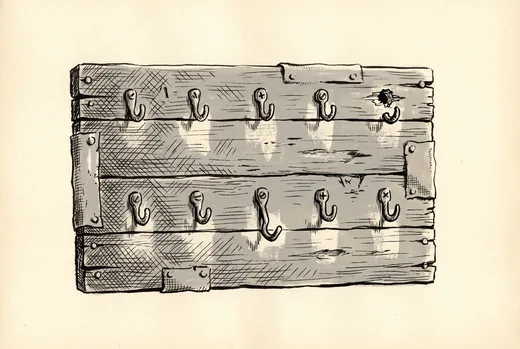
Ink drawing. A work-block duty board lying by itself, seen square on: a plank board with two rows of small iron hooks screwed into it and every hook empty.
Chapter 1
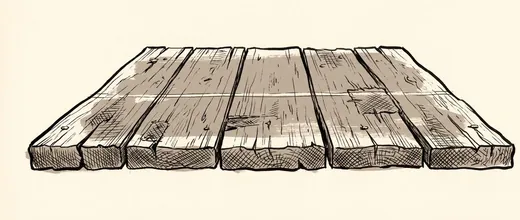
Ink drawing. One short section of a scrubbed plank table, about five feet of it, lying by itself, the joints between them open.
Chapter 2
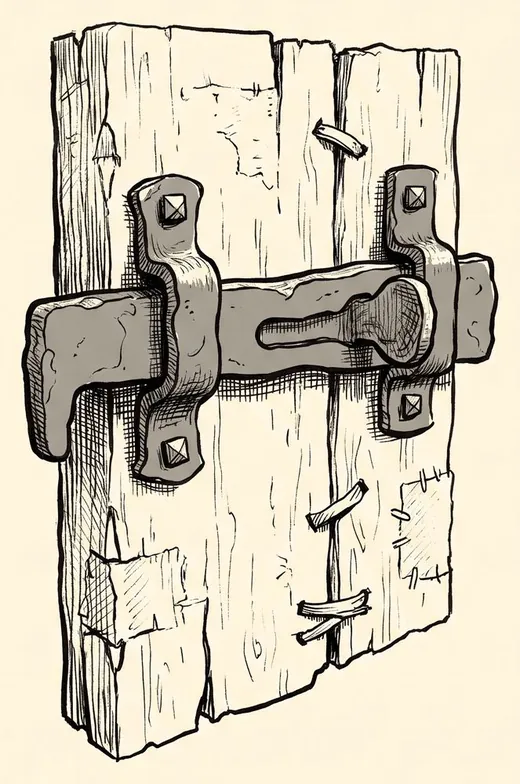
Ink drawing. An iron drop latch and its keeper mounted on a short piece of door plank, the latch bar lifted and resting up on the lip of the keeper: hand-forged and.
Chapter 3
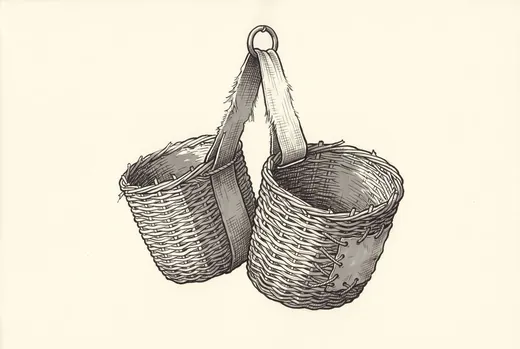
Ink drawing. A pair of pannier baskets joined by one wide flat webbing strap, hanging empty side by side and touching nothing: coarse split-willow weave going ragged.
Chapter 4
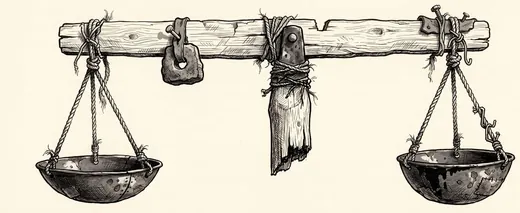
Ink drawing. A hand-made balance beam by itself: a plain straight hardwood arm resting on a central knife pivot, a shallow pan hanging on three cords from each end.
Chapter 5
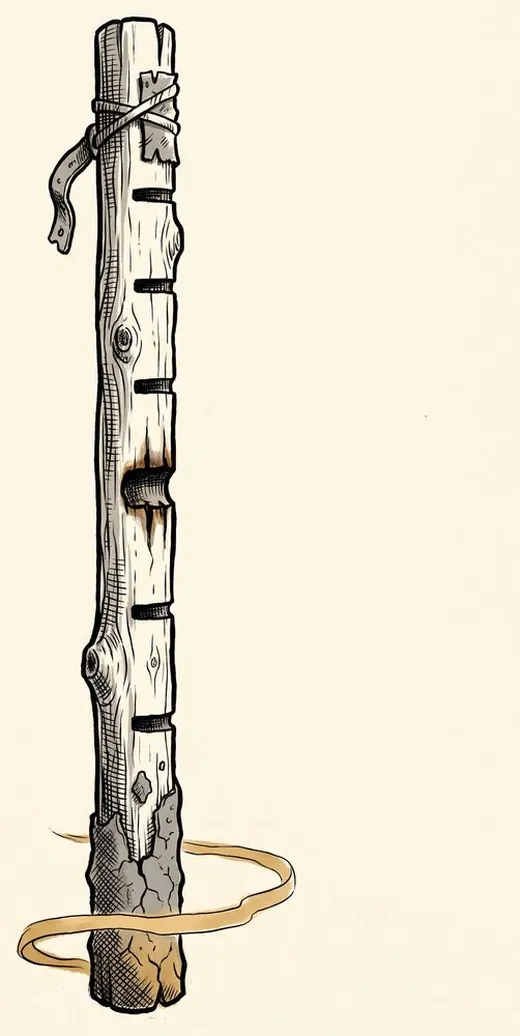
Ink drawing. A long straight measuring pole standing upright by itself, notched across at intervals and burnt black in bands at the notches.
Chapter 6
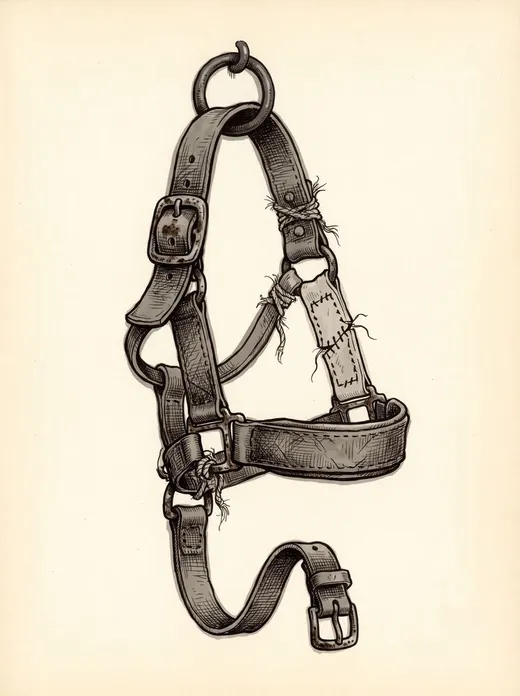
Ink drawing. A heavy leather headcollar sized for a very large animal, hanging by itself from one iron ring: broad noseband and cheekpieces.
Chapter 7
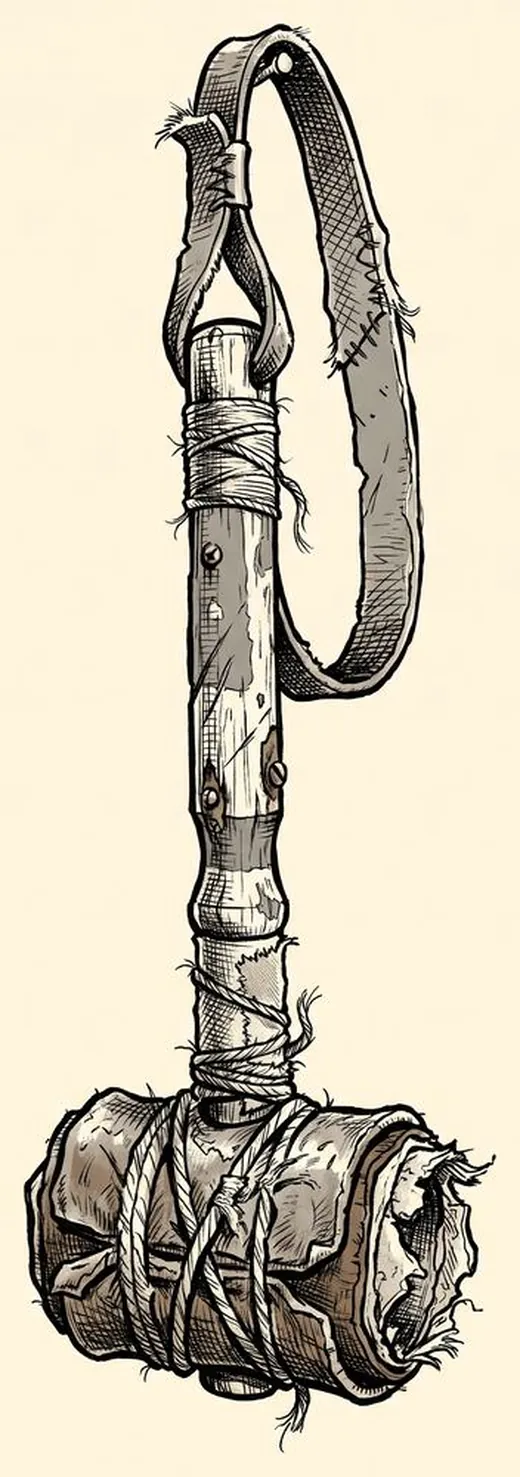
Ink drawing. A bell beater hanging by itself from a leather loop: a turned hardwood handle a foot and a half long.
Chapter 8
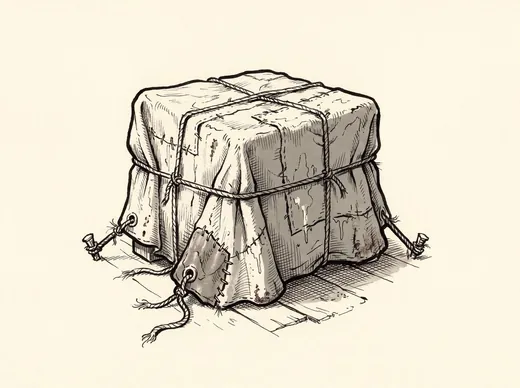
Ink drawing. A stiff tarpaulin thrown over a low square shape and roped down at two corners.
Chapter 9
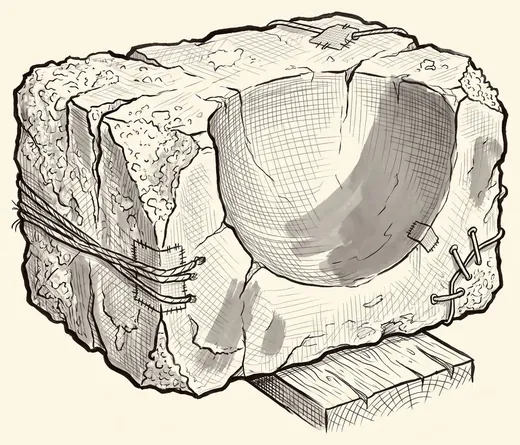
Ink drawing. A broken block of rock salt lying by itself, about the size of a footstool: fractured and sugary on three sides.
Chapter 10
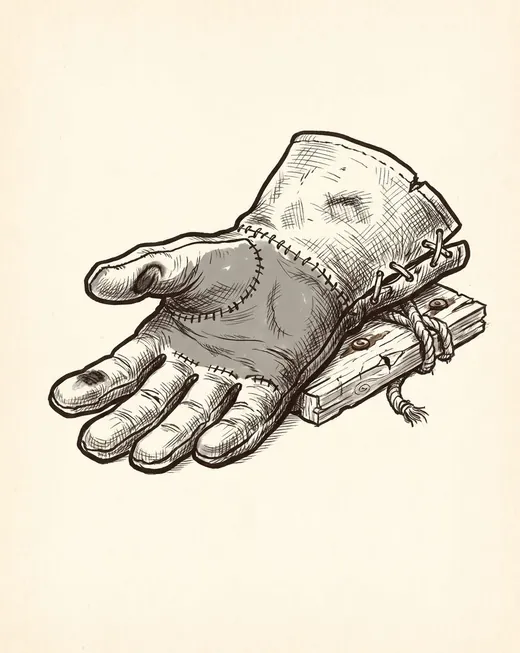
Ink drawing. One welding gauntlet lying palm upward by itself, the fingers open and slack: split cowhide gone dark and shiny across the palm.
Chapter 11
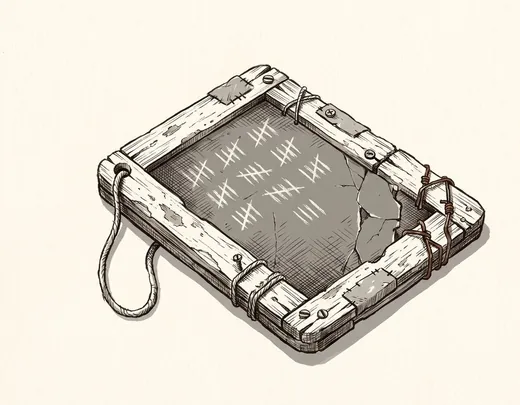
Ink drawing. A tally slate hanging by itself: a thin roofing slate bound into a narrow wooden frame.
Chapter 12
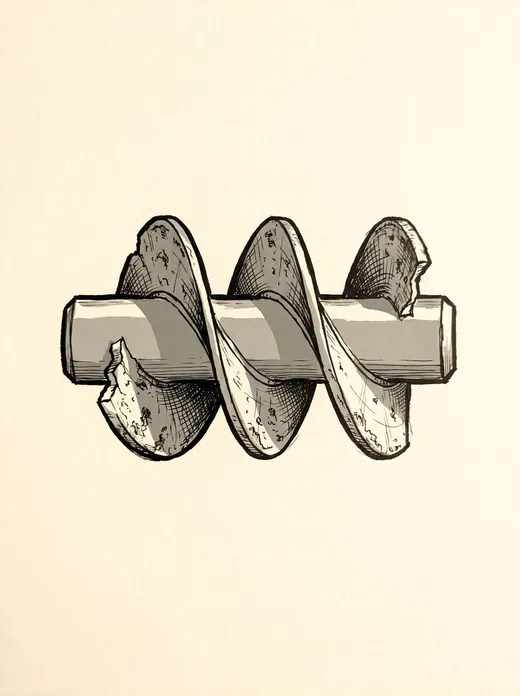
Ink drawing. One SHORT section of steel auger flighting lying by itself at a slight angle, no more than two and a half turns of the helix: a continuous helical ribbo.
Chapter 13
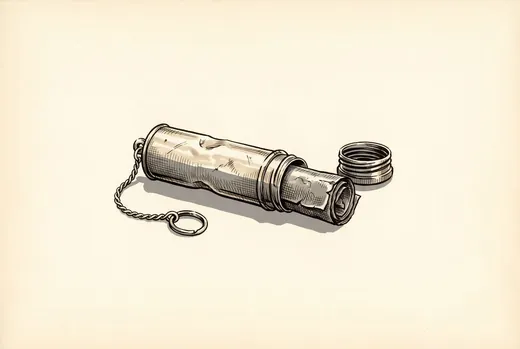
Ink drawing. A small brass message tube lying on its side by itself, about four inches long.
Chapter 14
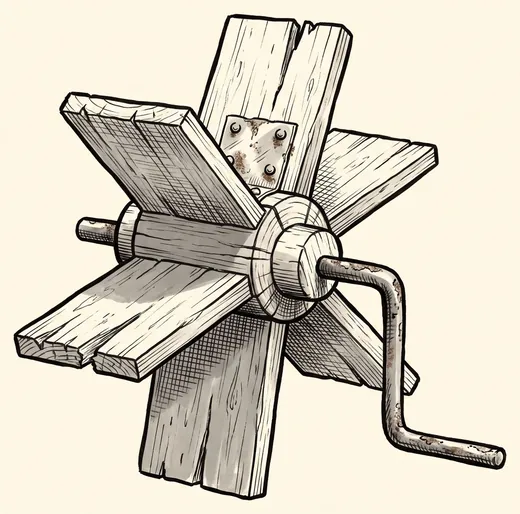
Ink drawing. A small wooden paddle wheel on a short axle, standing by itself: six flat blades let into a turned hub.
Chapter 15
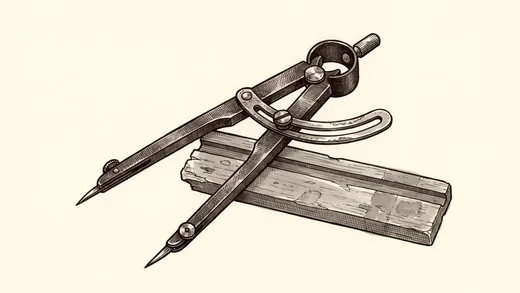
Ink drawing. A pair of steel dividers lying open across a short wooden straightedge, the two of them by themselves: the legs spread about six inches.
Chapter 16
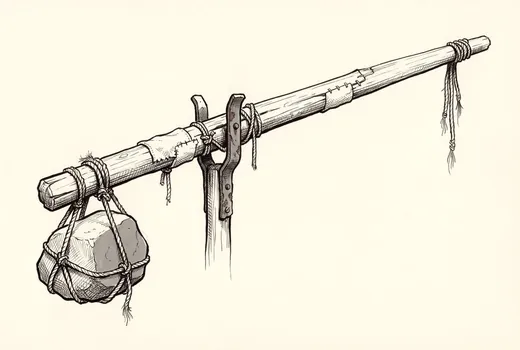
Ink drawing. A counterweighted gate boom by itself, raised at an angle: a long tapering pole pivoted in a forked iron bracket.
Chapter 17
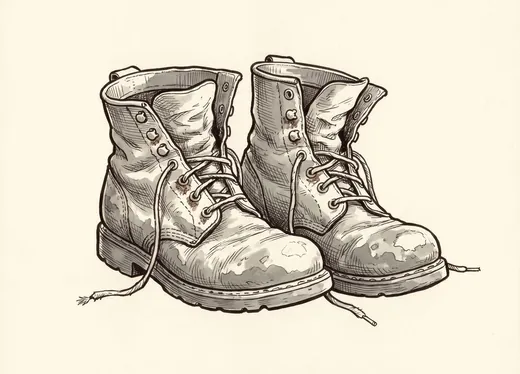
Ink drawing. One pair of heavy work boots set down side by side by themselves, toes together and the tops slumped over: the leather dark and swollen up to the welt.
Chapter 18

Questions about this one

Eight answers,
from this book’s own file.

Every one of these is a fact out of the manuscript or the catalogue rather than a sales line — the measured word count, the drawings that actually exist, the animal on the nonfiction page at the back.

What happens in The Salt Run?

The village loses eleven days of food in one night, and the only thing that stops the rest rotting is nine miles up-valley.

Who is it about?

Odji Faal, 15, Keeper of the Ledger. The only door of the salt dome, filling up with animals.

How long is The Salt Run?

About 22,482 words across eighteen chapters, a cold open and a tag - roughly a two-hour read for a confident reader in the 9-12 band.

Is it illustrated?

Yes. Eighteen drawings, one at the head of every chapter.

Do I have to read the others first?

Reading order is publication order, and there is no other order. This is Book Three of ten, and it closes its own problem, so it can be read on its own - but the season runs a clock under all ten and it reads better in order.

What is the nonfiction page at the back?

Triceratops. Triceratops — the frill, and what the bone tells you it was and was not for. The page names its own sources and says which parts of the story were invented, and it is free to read on this site.

What do you build at the back?

The balance beam: making two loads equal without knowing what either weighs. Household junk, numbered steps, under thirty minutes, and a number the child writes down at the end.

Is anything in it frightening?

Peril yes, cruelty no. No child dies, there is no swearing and no romance, and nothing anybody builds in these books is meant to hurt anyone - that last one is the first of the three Laws the series runs on.