About 1,800 words
The first chapter
The cold open and all of Chapter One of Signal Green, exactly as printed. Read it to a child before you spend anything.
Season One · The Nine Minutes · ten books
Ten adventures for readers nine to twelve, about a village lashed into seven enormous trees over a drowned town — where nobody tames a dinosaur, and a dinosaur is asked.
All ten, and the ten ebooks free with them. Ships free in the US.
The season, in order
A book is an episode. One concrete problem — water, salt, a herd, a signal — solved with rope, nerve, animal sense and friends, in about twenty-one thousand words, which is a two-hour read. Each volume puts one of eight kids at the center and gives the others work to do around them. Ten make a season, and they are built to be read in order: the same forty kids, the same animals, the same bell code running under all ten, and a village that keeps a written count of everything it has — so what one book spends, the next one is short of.
What it is
Every grown-up on Earth vanished in nine minutes, deep time came up in their place, and the kids who were left built a village in the treetops and asked the dinosaurs for help — and on your sixteenth birthday, you vanish too.
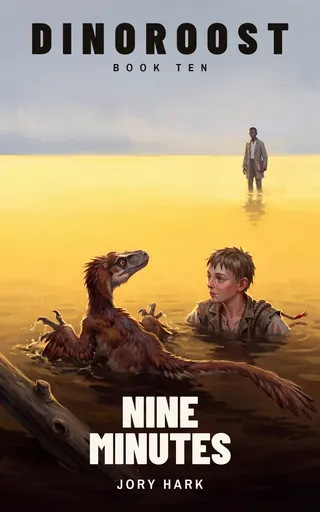
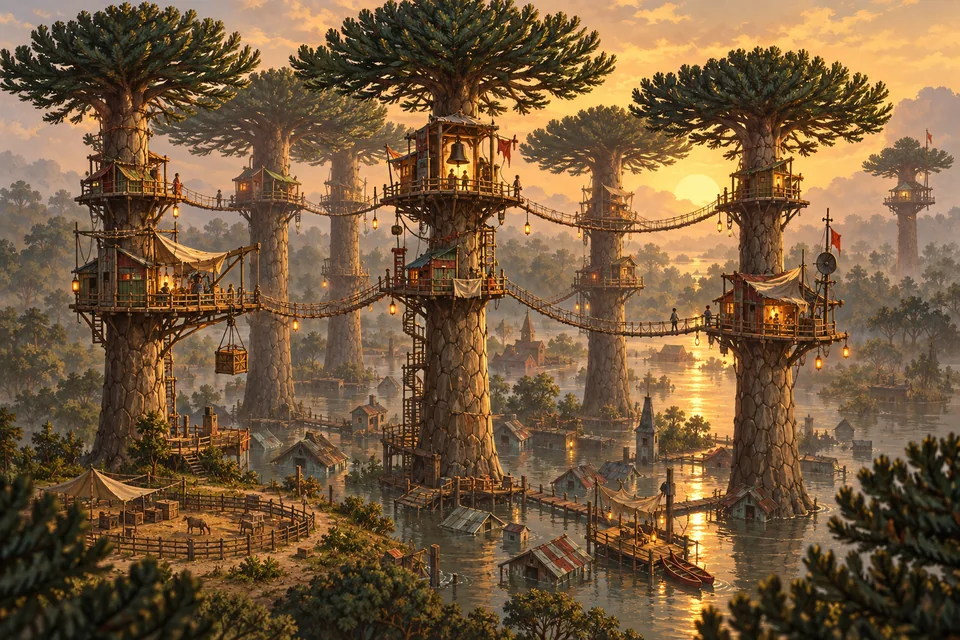
On an ordinary Tuesday the sky went pale for nine minutes. When it cleared, everyone older than sixteen was gone — not dead, gone, cars still idling and bread still rising. Then the old world came up through the new one: horsetail to the second floor, the animals of a hundred million years ago simply there. The kids call it the Overgrowing.
Three years on, thirty-nine children live in seven impossible trees over a drowned river city. Rope bridges, salvaged neon, a cargo lift worked by a Triceratops, a bell cut from a fire truck’s brake drum. They are not surviving. They are thriving, and that is the fantasy. Four miles downriver, a hundred and twelve kids in a flooded ballpark shock-collar their animals and keep an account of what everyone owes. That place works too. That is the problem.
Shelf
For a reader who finished Camp Cretaceous and wanted more of it; who reads The Last Kids on Earth for the funny bits; or who has looked at Dinotopia for an hour and wished somebody lived there.
Painted on the bell rail, ninety feet up
Every one of the ten books quotes one of them flat and then turns on it. Spoken, they are three short sentences that end arguments.
Law One
No rig points at a person.
“Point it down.”
Law Two
No dino carries a fight it did not choose.
“Not her fight.”
Law Three
Nobody goes Quiet alone.
“Not alone.”
How this world works

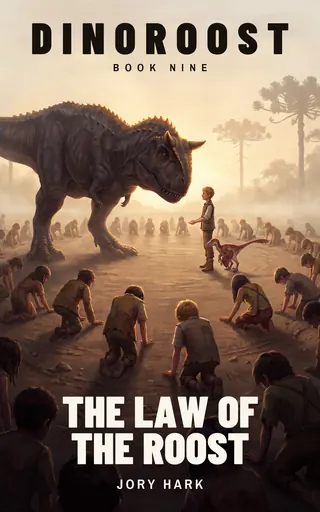
Nobody here tames a dinosaur. A dinosaur is asked. You sit in its weather for nine days or a whole season and do nothing, then kneel at the shoulder line with your hands open and empty, say your own name, and say out loud what you are asking for. The answer is yes, no, or not-yet, and not-yet is the usual one. The bond is a Match, which means the animal chose too and can un-choose: it walks its rig back to the platform and leaves it there. In three years that has happened four times.

A rig is harness gear an animal wears and helps operate — a net-caster on a Triceratops frill built around a diner’s lazy-susan bearing, a water cannon geared off an Ankylosaur’s tail swing. Every one of them comes off the animal itself, with no person and no tool, in about a second. That is the Cast-Off, and the first thing a Matched animal is taught is how to shed it. Riding comes second. Nothing a rig fires is meant to hurt anybody: nets, sap, mud, sound, rope, smoke, flares — never bullets, never blades, never fire.

Four miles downriver a hundred and twelve kids live in a flooded ballpark, shock-collar their animals and pay each other in plastic drink tokens. That place works too, and that is the problem. The Tally builds weapons. The Roost builds tools. That difference is the whole show.
The code the books run on
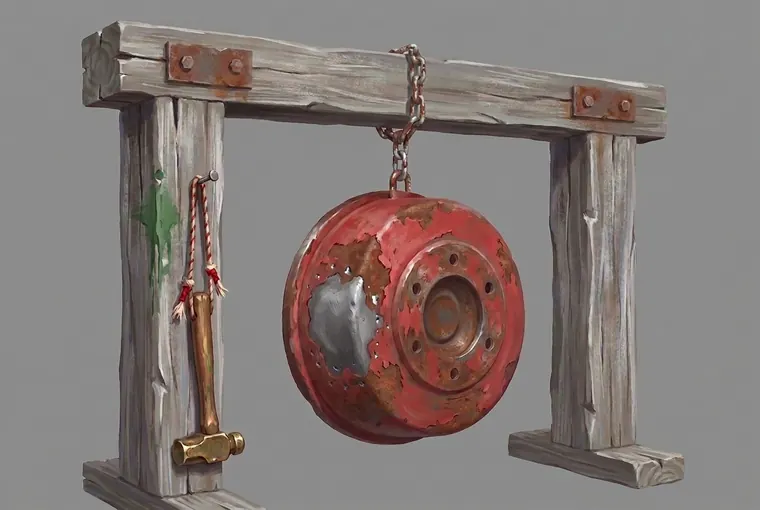
A fire truck’s brake drum at ninety feet, struck with a brass hammer on a jump-rope lanyard. It carries four miles downriver, which is exactly as far as the other settlement, and both sides know it.
Anybody may ring it. No permission, no age, no exception. It is not one of the Laws. It is the closest thing the Roost has to a fourth.

It does not drift. Two bells means food in Book One and it means food in Book Ten, and the Triceratops on the cargo wheel stops walking at two bells in every single one. A few signals are held back here because they belong to volumes you have not read.
| Signal | Means |
|---|---|
| One long | Wake up. Ratlines down |
| Two | Food. Come to the Long Table |
| Three, slow | Long Table sitting. Bring your spoon |
| Three, fast | Somebody is hurt. Clear the Lift and the Long Cross |
| Four, fast, rolling | Fire. Everything else in the world stops |
| Five | Strangers at the Gate. Not necessarily bad. Come and look |
| Five fast, then one long | The Tally |
| Six | Sundown. Gate closing. Last call for the Far |
| Two, pause, two, repeating | A Drift. Everyone off the ground and up; hands flat on wood; start counting |
| The Toll | Somebody is out there in the dark. The bell is a rope. Walk to it |
| The Scatter | Get off the ground. Something big is inside the paddocks |
| Three, soft | Late. Lights down to jars |
| Nine | Everybody stop. For nine minutes. It has never been rung. |
Eight kids, and the one from downriver
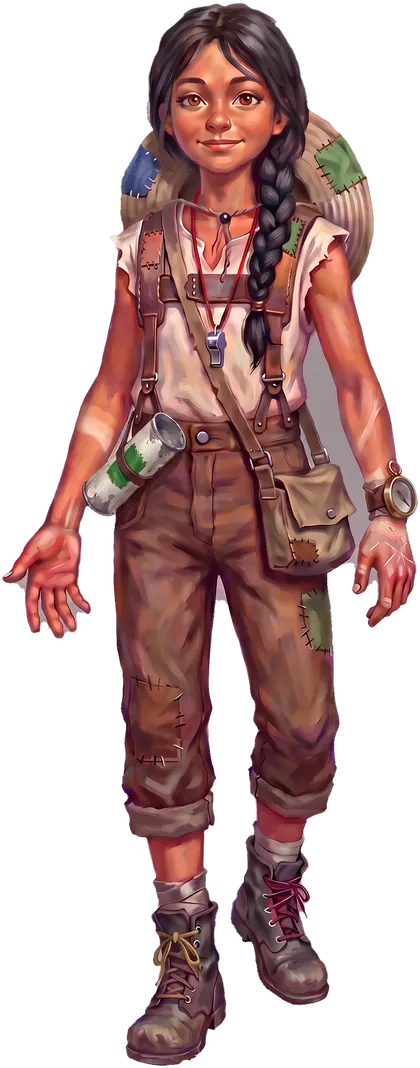
Each volume puts one of them at the centre and gives the rest work to do around them. They stand here to scale, which is a fixed thing in this series: Odji is tallest, Tarn is widest, and Pia is smallest by a head and furious about it.


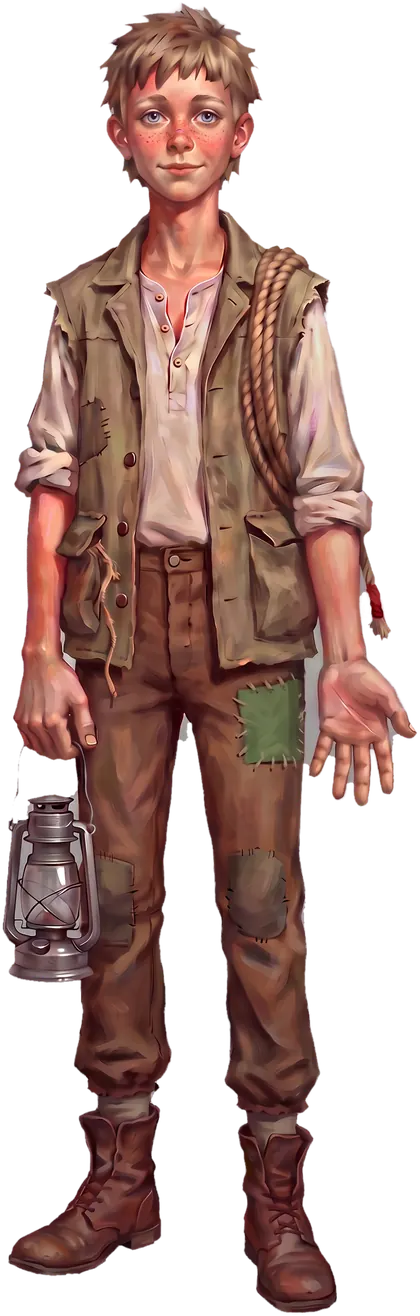
Book One
13 years old
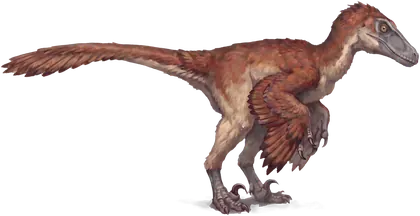
Rider, and the boy who says yes to everybody. He is the only person here who swims, and he says I’ll get that nine times a day and means it every time.
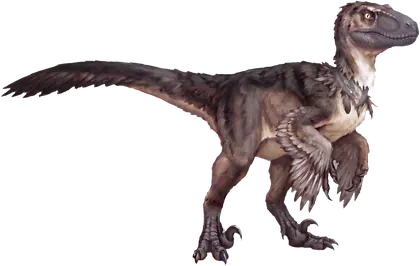
Matched to Bramble, Deinonychus.
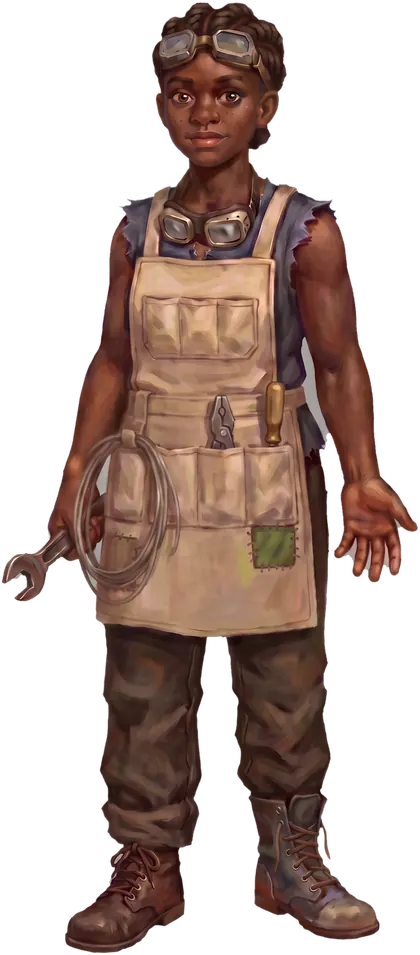
Book Two
14 years old
Head Rigger. Seven pockets, one category per pocket. She can hear a bad bearing three platforms away and has never been wrong, and when Nell runs, everyone runs.
Matched to Boiler, Ankylosaurus.
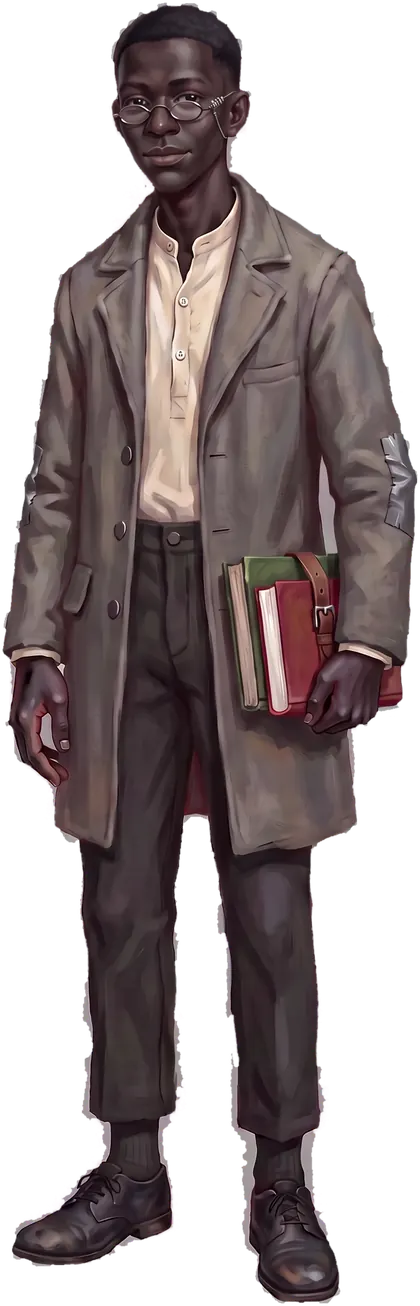
Book Three
15 years old
Keeper of the Ledger — every trade, every debt, every birthday, in three books strapped together. He will not Match, because he will not make an animal love somebody who is leaving.
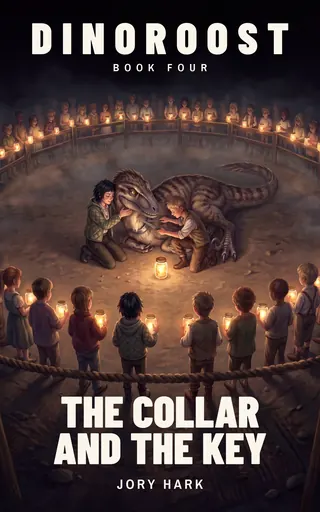
Book Four
13 years old
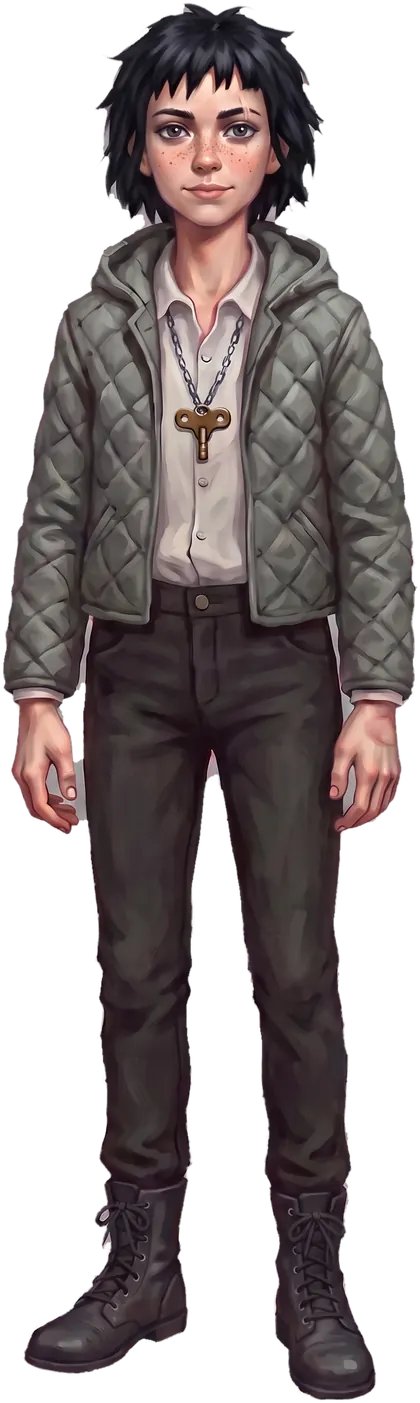
Came up the river from the Tally in the best-made coat in the Grove, and stands at an angle to whoever is talking so the door stays over her shoulder.
Matched to Nine, Utahraptor.
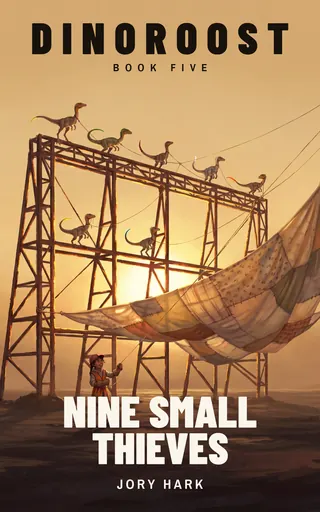
Book Five
9 years old
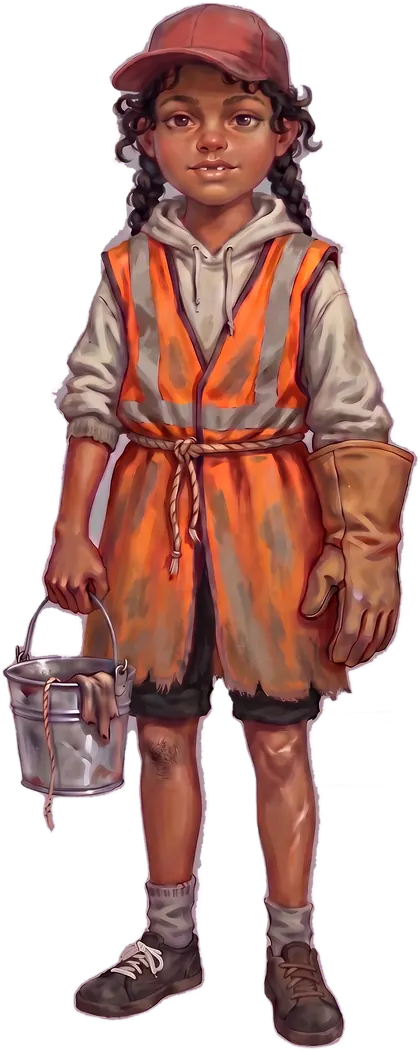
Runs the eleven Small and nine chicken-sized dinosaurs, out of a bucket holding snacks, string, a whistle, four beetles and a list. “I’m not little, I’m narrow. The difference is I fit.”
Matched to The Tick-Tocks, Compsognathus × 9.
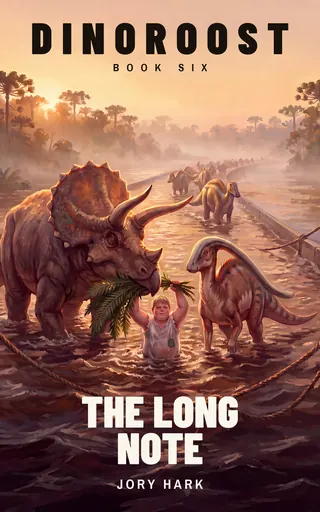
Book Six
14 years old
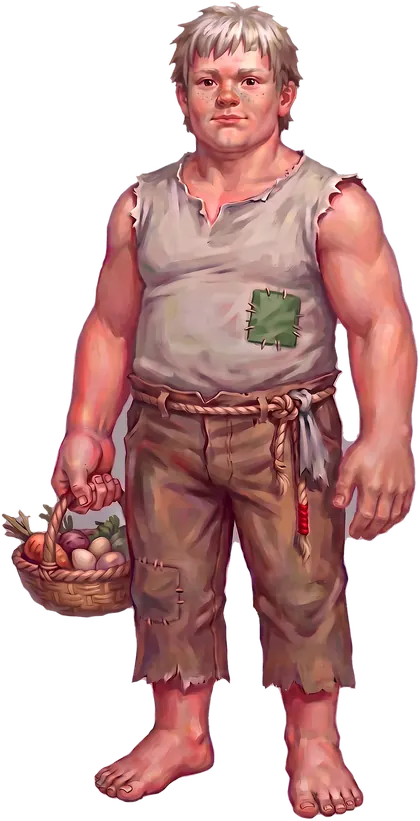
Green — food, hands, heavy work. He carries the calorie count of the whole village in his head and does not share it, and he arrives at every argument with something to eat.
Matched to Holly, Parasaurolophus.
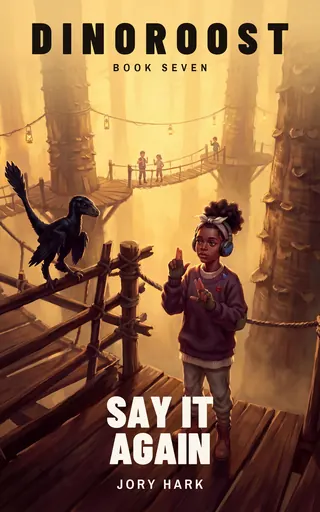
Book Seven
11 years old
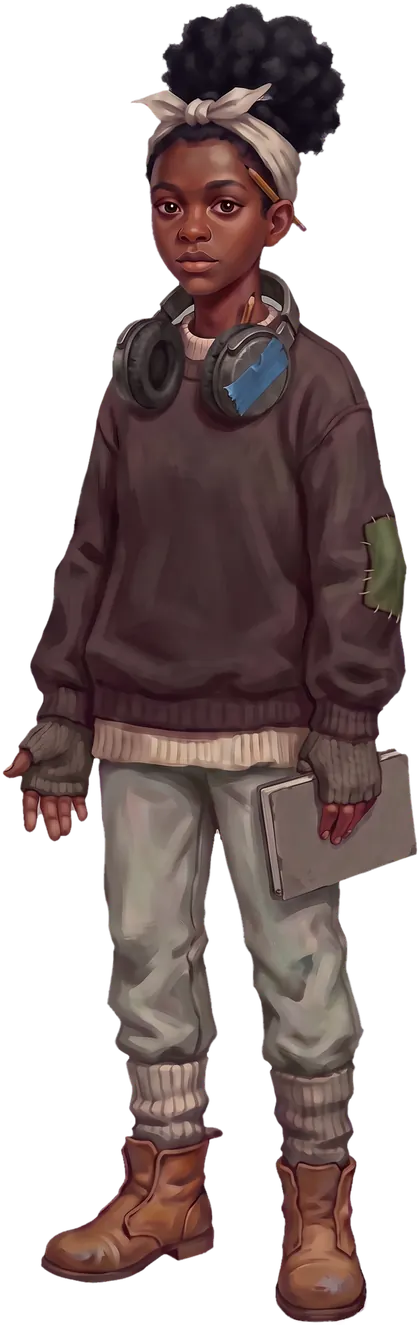
Keeps the Ear: forty-one salvaged speakers on a rack over the water, powered by whoever is listening pedalling a bicycle. She takes the watch nobody else wants.
Matched to Parrot, Microraptor.
Book Eight
12 years old
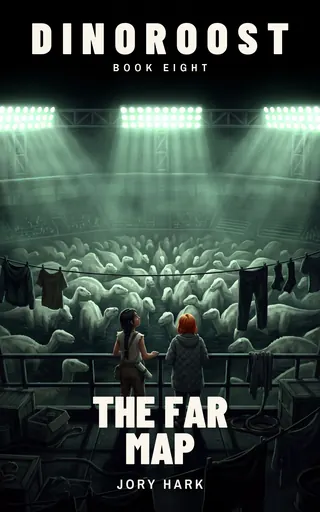
Far-scout. Out two days, four, once nine, and back with routes, water and where the patrols are walking. She keeps the Far Map: thirteen feet of paper, board and painted canvas.
Matched to Kettle, Gallimimus.
The Tally
15 years old
First of the Tally, four foot ten, and the only person in either settlement who sits down under your eye line to say the thing. She writes you a receipt afterwards.
And the animals that said yes
The animal chose too, and it can un-choose — walk its rig back to the platform and leave it there. In three years that has happened four times.

Deinonychus · Lars’s
The runt of his clutch and finished growing. A crooked outer toe ticks on plank decking, so the whole Roost always knows he is coming — and he will not put a foot in water.

Ankylosaurus · Nell’s
Six tons and wider than a car. Three slow knocks of his club on the decking means open the gate, and he will not cross a bridge until he has watched a person cross first.

Parasaurolophus · Tarn’s
Eight feet of folded tube inside four and a half feet of crest, and a note that carries three miles over water. She counts the village’s children, and if one is missing she will not move.

Utahraptor · Kit’s
Eighteen feet and an appallingly quiet lope. Named for the number off her old tag, kept so nobody gets to pretend it did not happen. She steals hats and wears them terribly.

Compsognathus × 9 · Pia’s
A yard long, three pounds, mostly tail, each tail painted a different color of salvaged nail polish. One clicks and nine synchronise inside four seconds.

Microraptor · Wren’s
Four wings and two pounds. He copies the bell, a door hinge and Tarn’s cough, always at the worst moment, and in rain he becomes a wet sock and sulks for hours.

Gallimimus · Mars’s
Tall as a horse and steaming on cold mornings, which is the name. She will run all day, will not go through a doorway, and whistles about three seconds before she bolts.

Rhamphorhynchus-type · Mars’s
A six-foot wingspan and one destination in the world: she only ever flies home. Every scout carries her out in a basket to send anything back.
Signal Green · Cold Open
Vee Toomey was four, and she had the rule by heart, which was the only reason she was allowed in the boat.
“Count the logs before you cross,” Vee said, “and if a log has two knots on top, it is not a log.”
“Again.”
“Count the logs before you cross, and if a log has two knots on top it is not a log, and there should be more fish than this.”
“That last part isn’t in it.”
“It should be,” Vee said.
Pia let it go, because the child was not wrong. Day 1,096, and thirty lines in they had four catfish, a bullhead the size of a thumb, and somebody’s shoe.
They worked the street from the north end, where two feet of brown water stood over the sidewalk and the parking meters came up through it like reeds. Forty-one set lines, tied off to parking meters, railings, a fire hydrant and one drowned mailbox. They ran them every morning before breakfast and rebaited whether they had caught anything or not. The boy did the knots. Dot bailed with a paint can and nobody had to tell her. Vee was allowed to hold the fish. That was the whole of Vee’s job and she took it seriously.
The punt leaked out of one seam, politely. Behind them the Grove stood up out of the flooded blocks with its lamps still burning at a hundred and ninety feet. Nobody had gone up yet to put them out. Yesterday somebody had propped a door open up there and left it open all day. This morning it was shut again. That happened once a year, and Pia had stopped asking about it when she was seven.
“Line nine’s gone,” the boy said.
“Gone how?”
“Gone with the meter.”
“Write it on your hand.”
Going home meant crossing the mouth of the street, where the current came round the bank building and ran. Pia stood the pole up and looked, and counted, because that was what you did and it took no time at all.
Four logs. Five.
The sixth had two knots on top of it, an inch apart, and they were pointed at the boat. There was moss grown over the back of it, with a little duckweed in the moss.
Pia did not tell anybody to be quiet. Telling them would be noise. She put the pole down through the water instead of dropping it in, and pushed, and brought it back through the water instead of over it. They went across at the speed of a thing that is not going anywhere in particular. Vee explained to the bullhead why it was going to be eaten. The knots went by nine feet off the bow and did not turn.
At the landing she tied off and counted heads on the boards. Twelve.
Then she counted them again and got twelve.
That is the first page of the first book, exactly as it is printed.
Get Signal Green — $8.99What a chapter opens with
Books One, Two and Three carry eighteen each, at the head of every chapter, of the object that chapter turns on. Books Four to Ten are text and cover for now, and everyone who buys one will be told when that changes.


Free, and the whole thing rather than a taste
Not extracts, and not behind an email form. The two nonfiction pages at the back of every volume are on this site in full, along with the whole first chapter and everything anybody needs to know about the world.
About 1,800 words
The cold open and all of Chapter One of Signal Green, exactly as printed. Read it to a child before you spend anything.
Ten animals
One real dinosaur a volume: how to say it, when it lived, two pieces of evidence a nine-year-old can check, and who found them.
Ten builds
Household junk, numbered steps, under thirty minutes, and a number the child writes down at the end. A siphon, a balance beam, a bull-roarer.
The whole world
The places, a day from grey light to lights out, the bell code, how to say every name out loud, and what every word in the books means.
Buying
The way in
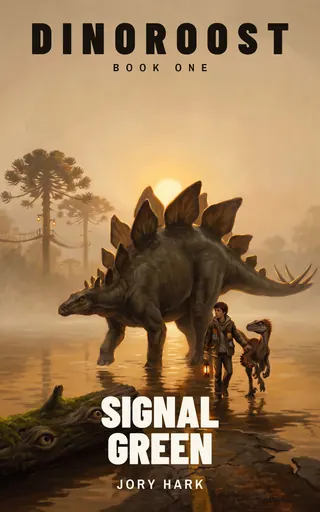
Three years after every grown-up vanished, a thirteen-year-old has to walk five tons of dinosaur home across a flooded road in the dark.
$8.99
Signal GreenThe whole thing
All ten paperbacks in reading order, printed together and sent in one box. Ships free in the United States.
$89.90
The ten-book setThirty at a time
Thirty copies of one volume at $8.09 each, shipped free in the US, on a purchase order if that is how your district buys. Teacher’s notes are free either way.
$242.70
For schools and librariesWhat you get. Orders leave in three to five working days. The ten-book set arrives in one box, with the ten EPUBs free alongside it.